Back to Dogs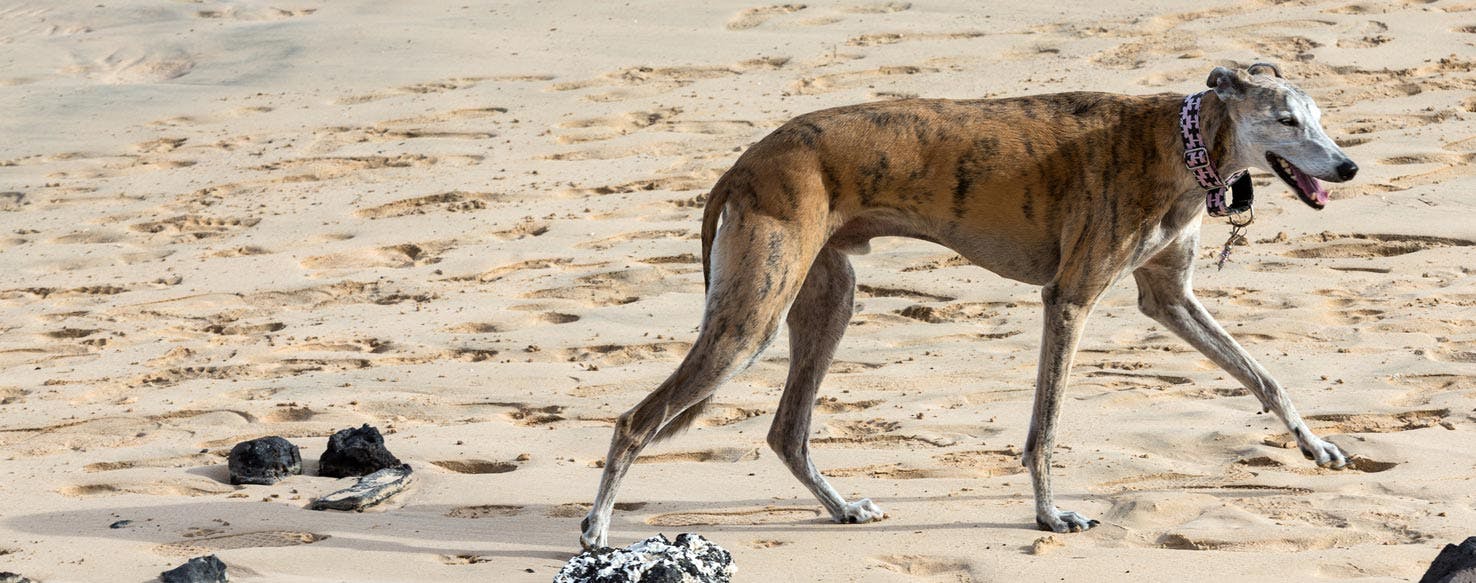
United Kingdom•hound
Greyhound
moderateApartment FriendlyGood with Kids
Ancient sighthound known as the '40 mph couch potato.' Gentle, non-aggressive temperament. Virtually no body fat requires soft resting places and indoor housing.
Weight27-32 kg59.5-70.5 lbs
Height69-76 cm27-30"
Lifespan10-14 yrs
Overview
Personality and care at a glance
GentleIndependentSweetNobleQuiet
Height
69-76 cm27-30"
Weight
27-32 kg59.5-70.5 lbs
Lifespan
10-14 yrs
Breed Traits
Size
Large - Size category based on typical adult weight
Energy Level
Balanced - enjoys play sessions and moderate activity
Trainability
Moderately trainable - learns with consistent effort
Grooming
Minimal grooming - occasional brushing
Barking
Rarely barks
Attachment Style
How much this breed typically wants to be near their people versus enjoying time on their own.
IndependentHighly Dependent
Balanced companionship
Size Comparison
🧍
Human~6ft / 183cm🐕
Greyhound69-76 cm27-30"Compatibility
How well Greyhound matches your lifestyle
??%
Your Match Score
Take our 2-minute lifestyle quiz to see how well Greyhound matches your lifestyle.
Good Fit
- +
- +
- +
Things to Consider
- !
- !
Exercise
Activity requirements for Greyhound
medium energy45-60 min/day
Greyhounds need regular daily exercise to stay fit and content. A mix of walks and play will keep them mentally and physically satisfied.
30-60 minutes daily with opportunities for short sprints
Recommended Activities
Low intensity
Mental Stimulation
Puzzle toys and training games for mental exercise.
10-15 min
Moderate intensity
Daily Walks
Regular walks at a moderate pace, ideally twice daily.
20-30 min each
Moderate intensity
Fetch & Retrieval Games
Active play sessions with balls or toys.
15-20 min
Moderate intensity
Social Play
Playdates with other dogs or interactive games with family.
20-30 min
Grooming
Coat care and maintenance for Greyhound
Low Maintenancefur coat
Greyhounds require minimal grooming maintenance. Occasional brushing and basic hygiene care will keep them looking their best.
Weekly Brushing
A quick brush once a week removes loose hair and distributes natural oils for a healthy coat.
Weekly
Occasional Bathing
Bathe only when dirty or smelly - typically every 2-3 months. Over-bathing can strip natural oils.
Every 2-3 months
Nail Trimming
Keep nails trimmed to prevent discomfort and clicking on floors. If you hear clicking, they're too long.
Every 2-4 weeks
Dental Care
Brush teeth regularly or provide dental chews to prevent plaque buildup and gum disease.
2-3 times per week
Training
Training approach for Greyhound
Moderately Trainable
The Greyhound is reasonably trainable with consistent effort. They learn well but may need more repetition than eager learners.
Best Approach
Be patient and consistent. Use high-value rewards and keep training sessions short but frequent. Consistency in commands and expectations is key.
Training Tips
Essential
Stay Consistent
Use the same commands and expectations every time. Consistency helps them understand what you want.
Essential
Short Training Sessions
Keep sessions to 10-15 minutes to maintain focus and prevent frustration for both of you.
Recommended
High-Value Rewards
Use especially enticing treats for training to maintain motivation and attention.
Recommended
Practice Patience
Some commands may take longer to learn. Stay patient and celebrate small victories.
Common Challenges
- May lose focus during longer sessions
- Can be distracted by environment
- May test boundaries occasionally
Nutrition
Feeding guidelines for Greyhound
Large Breed2 meals$45-113/month
Large breeds need careful nutrition management, especially during growth. Controlled growth and joint support are key priorities.
Feeding Tips
Large Breed Formula
Use foods specifically formulated for large breeds, especially during puppyhood for controlled growth.
Joint Support
Look for foods with glucosamine and chondroitin to support joint health throughout life.
Don't Overfeed puppies
Rapid growth stresses developing joints. Large breed puppies should grow slowly and steadily.
Consider Bowl Placement
Some large dogs benefit from elevated food bowls for comfortable eating posture.
Important Considerations
- Rapid puppy growth increases risk of joint problems
- Higher risk of bloat - avoid exercise right after eating
- Prone to obesity in less active individuals
Health
Common health conditions to watch for in Greyhound
1
High Risk
3
Common Issues
Understanding breed-specific health risks helps you provide better preventive care. Regular vet checkups and health screenings can catch many issues early.
High Risk Conditions
Common Issues
This information is for educational purposes only and should not replace professional veterinary advice. Always consult with your veterinarian about your pet's specific health needs.
Ownership costs
Estimated expenses for Greyhound
Monthly costs
Food
$45-113
Insurance
$38-89
Supplies
$17-35
Monthly total
$100-237
Annual costs
Veterinary care
$492-828/yr
Parasite prevention
$432/yr
Annual total
$924-1,260/yr
Estimates based on 2024-2025 research, adjusted for Greyhound's size. Actual costs vary by location and provider.
Regional insights
Local factors affecting pet ownership costs in United States
- •Pet industry expenditure reached $152B in 2024, projected $157B for 2025
- •66% of households own pets (86.9 million homes)
- •Pet CPI continues to outpace general inflation
What's not included
- •Initial adoption/purchase fees
- •One-time equipment purchases (beds, bowls, leashes)
- •Emergency veterinary surgeries
- •Boarding/daycare services
Sources
4 references for Greyhound
American Kennel Club Breed Information
Registry·American Kennel Club
Hip Dysplasia in Dogs
Veterinary·Orthopedic Foundation for Animals
Canine Health Information Center - Greyhound
Health·OFA-CHIC
Bloat in Dogs
Veterinary·American Kennel Club
Information sourced from breed registries, veterinary organizations, and peer-reviewed research